About
Meet Professor Sweta Mukherjee
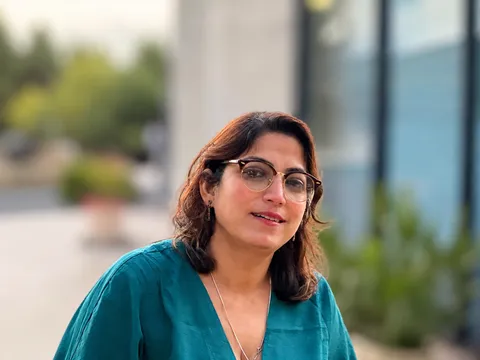
A college math professor, a lifelong student of the subject, and, most importantly, the teacher who believes your student can genuinely become good at math.
Where I grew up
I grew up in India, in a culture where education was deeply valued. But for me, math was always more than memorizing formulas to pass an exam. I loved the clean logic of it: how a massive, complex puzzle could be broken down into undeniable truths. That fascination stayed with me through school and shaped my entire higher education journey right here locally, in the East Bay. I started with two years at Ohlone College, before transferring to Cal State East Bay to earn both my undergraduate degree and a Master's in Applied Mathematics.
How I ended up teaching
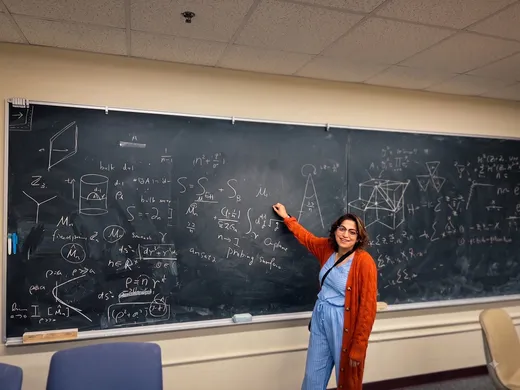
Things came full circle when I returned to Ohlone College as a faculty member, where I have now been teaching math for twelve years. Having sat in the exact same desks as my students before leading the classroom gives me a unique, 360-degree perspective on the local academic pipeline. I know exactly what the East Bay high schools prepare students for, what college math courses demand, and what it takes to make that transition successfully.
But while the college lecture hall lets me teach at scale, it moves at a fixed pace, and that inevitably leaves some students behind. That's why I balanced my career in higher education with a deep commitment to private tutoring. In a 1:1 or small-group setting, I can look at a student's paper, see exactly where the logic breaks down, and pivot in real time. Tutoring gives me the close proximity to help students navigate math at their own pace, diagnosing errors and building real confidence.
Bridging the gap
In twelve years of teaching college math, I've seen exactly where the gap lies between high school preparation and college readiness. The hurdle is rarely a student's ability to grasp advanced concepts like limits or differentiation. Instead, they trip over the underlying mechanics: small algebraic mistakes that compound into failed exams.
Bridging that gap requires a deliberate, diagnostic approach. We don't just stare at the complex calculus problem and feel defeated. We pause, step back, and run targeted algebra drills until the mechanics become second nature. Once that friction is removed, advanced math suddenly feels effortless.
"There is nothing better than taking an intimidating math concept and breaking it down until it finally clicks. When you clear away the confusing language and show a student the actual logic behind a limit or a derivative, their entire posture changes. The anxiety disappears, the lightbulb goes on, and they realize they can actually do this. Turning something that felt impossible into a simple, digestible breakthrough is exactly why I love teaching."
— Sweta
One student's story
From dread to fluency.
One student came to me completely overwhelmed by advanced math preparation. On paper, they were bright and understood the high-level concepts, but their confidence was shattered because they kept failing exams due to minor algebraic mistakes.
Instead of endlessly repeating advanced calculus topics, we paused and isolated the foundational gaps. We spent weeks running structured algebra drills until the mechanics became automatic. Once that friction was gone, their trajectory shifted completely.
Not only did they master the advanced coursework, the dread turned into genuine excitement. Watching a student go from feeling "bad at math" to walking into a college-level math class fluent and confident is exactly why I am launching Believe.
12 years
Teaching mathematics as adjunct faculty at Ohlone College.
MS Applied Mathematics
Cal State East Bay. Undergraduate and graduate degrees, both from CSUEB.
Local roots
Started at Ohlone College as a student. Returned as a professor. Now teaching families across the East Bay and beyond.
Ready to see how I teach?
Book a free 30-minute diagnostic. We'll assess where your student stands, find the specific foundational gaps, and map out what a program would look like.
Book Your Free Diagnostic